 Saskia Teichmann
What you'll take away from this: You'll see why a deliberately planned transition away from a tool still comes at the cost of context—and how that led to the creation of my file-based Agents Brain.
On February 10, 2026, I set up Nox: my AI orchestrator for a team of fifteen specialized agents. At the end of March, I discontinued the tool that had been used to organize this team.
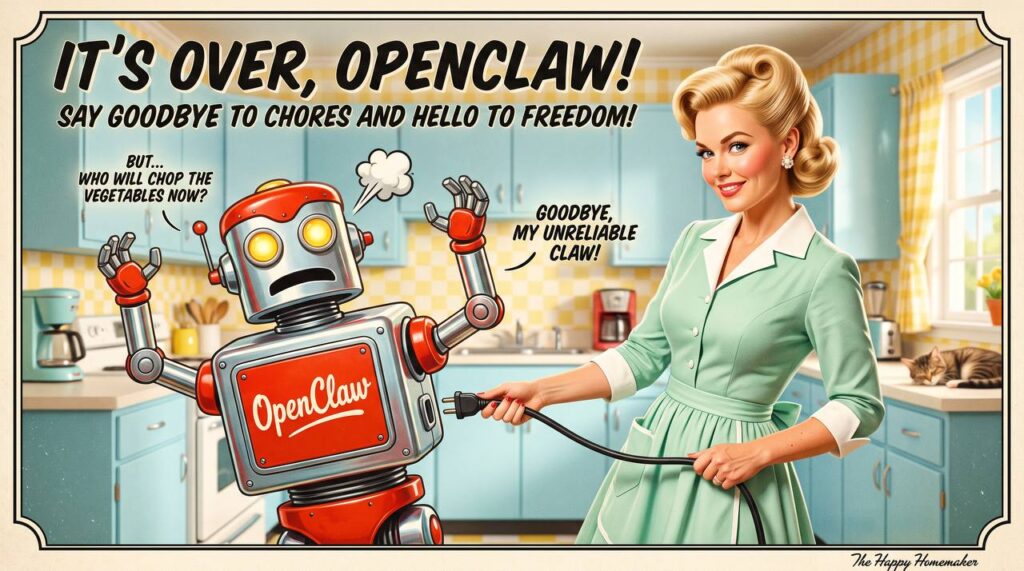
This wasn't an unplanned outage. OpenClaw had repeatedly caused me problems with updates. The updates often ran in the early morning hours. On some days, it would take me half a workday afterward just to get OpenClaw and my setup running smoothly again. Eventually, the math was clear: I was spending too much time fixing the infrastructure and not enough time doing what it was meant for. So I made a conscious decision to stop using it.
The decision was the right one. Its consequences were nonetheless revealing.
I thought I was just replacing a tool
Back in February and March, the team already had a clear division of labor. One agent did research, another wrote, and a third reviewed. Nox, as the orchestrator, kept track of tasks, their order, and hand-offs. This setup wasn’t just theoretical—it had been working effectively for six weeks.
When the tool was discontinued, this collaboration could not simply be exported. The ongoing orchestration, channels, and automations were part of the system’s state at that time. They could not be transferred to the next tool as a functioning unit.
However, one part did survive: the Markdown files.
Personas, long-term knowledge, and daily logs were readable even though the original tool was no longer in use. I didn't need an export function or a special interface for these files. A text editor was enough.
This made the decisive boundary visible: I had to rebuild everything that existed only in the tool environment. I was able to reuse whatever was available as a file.
The model is rarely the problem. It's almost always the context.
From late March to mid-May was the concept development phase
After the phase-out, I didn't just install the next agent framework. From April through mid-May, I worked on three issues.
How can (my) AI team truly become portable?
A folder full of files isn't a system. I wanted a structure from which I could reliably load an agent into a new tool: with the same role, the same boundaries, and the same relevant knowledge.
To do this, it had to be clear which pieces of information were part of an agent's identity—and which were simply characteristics of the current tool.
How do I change the orchestrator?
As a team lead, Nox was closely tied to his work environment at the time. I wanted to break that connection. The Orchestrator should be able to take on a different technical form without me having to reinvent its persona, craftsmanship, and approval rules.
This meant that identity could no longer be tied to the system prompt of a single tool. The tool should only load what had already been defined in an independent location.
How do sessions turn into long-term memory?
Session histories are convenient, but they are not a reliable long-term storage solution. They are truncated, disappear from the visible context, or can only be used within a specific product (e.g., Claude Code, ChatGPT Codex, OpenClaw, etc.).
That's why I needed a writing routine: daily logs of my experiences, curated long-term knowledge of what matters most, and lessons learned from mistakes I don't want to repeat.
These three questions—portability, body-swapping, and memory—became the core of my concept.
On May 16, the sketches were turned into a report
On May 16, 2026, I made the first commit to the new repository. The commit message read: feat: initial shared brain skeleton.
The name was fitting. The system was a skeleton, not a finished product. But the fundamental decision had been made: Markdown is the source of truth. Git keeps track of changes. Each agent gets its own folder. Shared knowledge is referenced rather than copied. Tools are equipped with lightweight adapters that point to this source.
I call my system Agents Brain. Similar file-based approaches exist elsewhere as well, because, logically, I’m not the only one struggling with the „teething problems“ of agent-based AI, which is still in its infancy. Here is my workshop report: a live multi-agent system with roles, memory rules, and explicit approval gates.
What Files Can Solve—and What They Can't
Files make context readable, versionable, and portable. However, they do not automatically solve the memory problem.
For example, a week in March is missing from the old daily logs. This gap is real. It didn't occur when we switched tools, but before that: What nobody writes down cannot be reconstructed later by any repository.
That is precisely why architecture is more than just a storage location. It requires rules governing what is read at the beginning of a session and what is written at the end. It requires a boundary for sensitive content. And it requires the discipline to curate long-term knowledge rather than permanently storing every transaction.
More about consulting on system architecture, technical decisions and implementation.
So my deliberate decision to stop using OpenClaw didn't show me that a particular tool is bad. It showed me that my agent identity must not be tied to any one tool.
The Decision Behind the System
My most important design goal can be stated without any grandstanding:
If a tool were to disappear tomorrow, the Markdown files would remain readable and the agent could still be reconstructed from them. Engines and interfaces are add-ons, not prerequisites.
I continued to refine the system from May through June. On July 6, the practical test run began: Nox was moved to Hermes, while its Brain remained in the repository.
Whether this distinction holds up in everyday life is not something that can be answered by looking at an architectural drawing. It has to stand up to the realities of actual work. That is exactly what I have been testing ever since.
In the next section, I'll outline the seven hard rules that emerged from this conceptual phase—and explain why my Agents Brain is intentionally a Git repo rather than a new database.
Sources
- Project History: agents-brain specification and Git history, as of July 15, 2026 (private primary sources)
- Pro Git: About Version Control
- Obsidian Help: How Obsidian Stores Data
Agents Brain Series




Discussion on the post
0 comments