Saskia Teichmann

Every release becomes a risk.
Small changes always require more coordination and testing. Still, it remains unclear what else might go wrong.
E-Commerce Audit · Independent System Review
The E-Commerce System Review is an independent assessment of your online shop and the systems behind it. I examine business processes, architecture, commerce functions, integrations, security and day-to-day operations. You receive an executive summary, prioritised risks and a modernisation roadmap for your next decision.
I analyze your system from a business, user, and engineering perspective. This helps determine whether there is a single error—or whether multiple factors are at play.
Small changes always require more coordination and testing. Still, it remains unclear what else might go wrong.
The store, ERP, PIM, CRM, payment, shipping, and analytics systems are all connected. If something goes wrong, the search begins across systems and departments.
The cache, hosting, and individual plugins have already been optimized. The problem keeps recurring because the architecture, data volumes, and operations were never evaluated together.
Before migrating, you should compare continued operation, phased modernization, and switching to a new system based on the same requirements and risks.
Then, data quality, access rights, approvals, costs, and responsibilities must be clarified—not just after the first production deployment.
Both sides see real risks, but from different perspectives. The review establishes a shared understanding of the system to inform the decision.
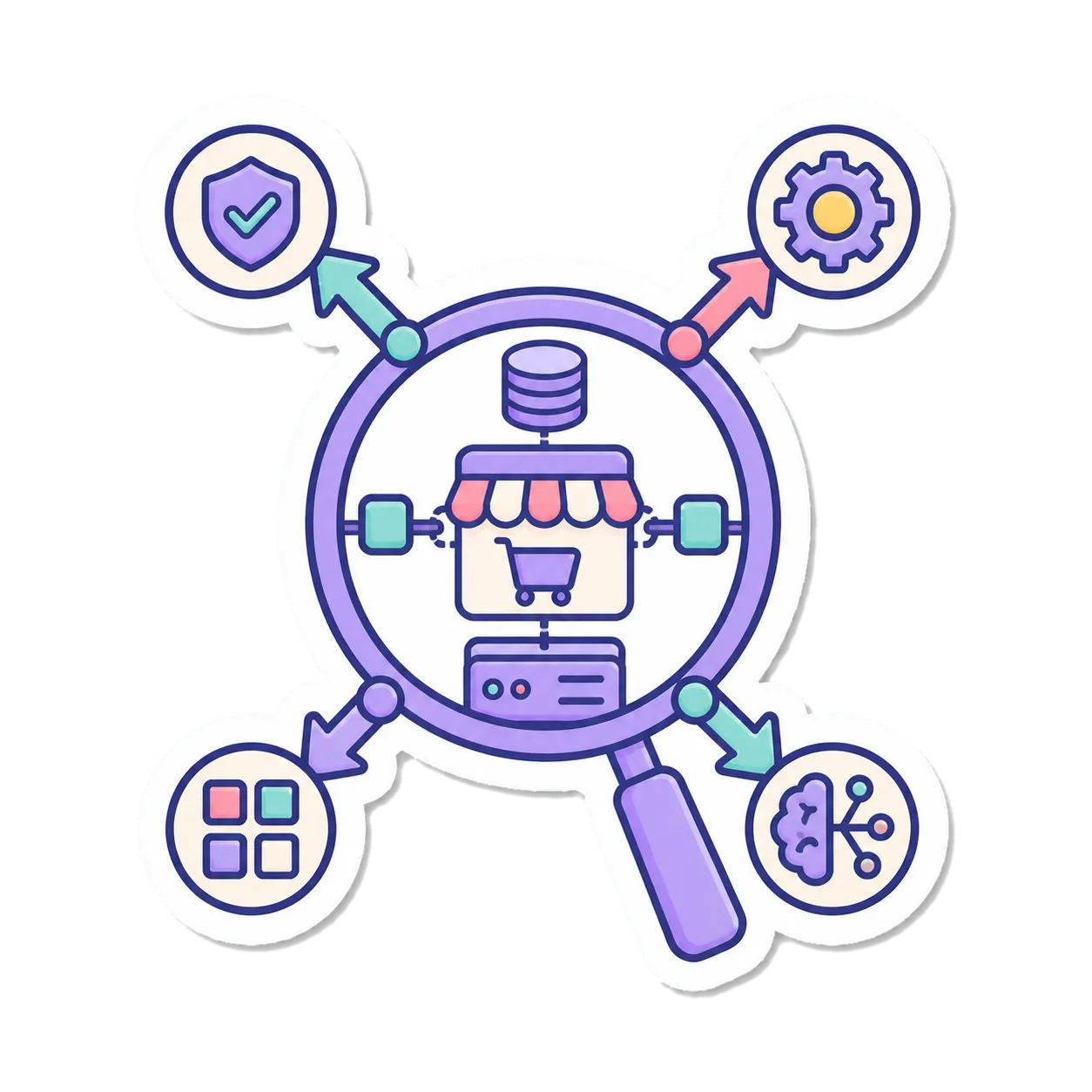
I only examine the areas that are important to your decision—and the connections between them.
What processes ensure revenue and service? Who is responsible, and what disruptions can the company withstand?
How are the store, extensions, hosting, and deployments structured? Where do tight couplings make changes or growth difficult?
Do the catalog, prices, taxes, checkout, payment, and ordering functions work properly even in important special cases?
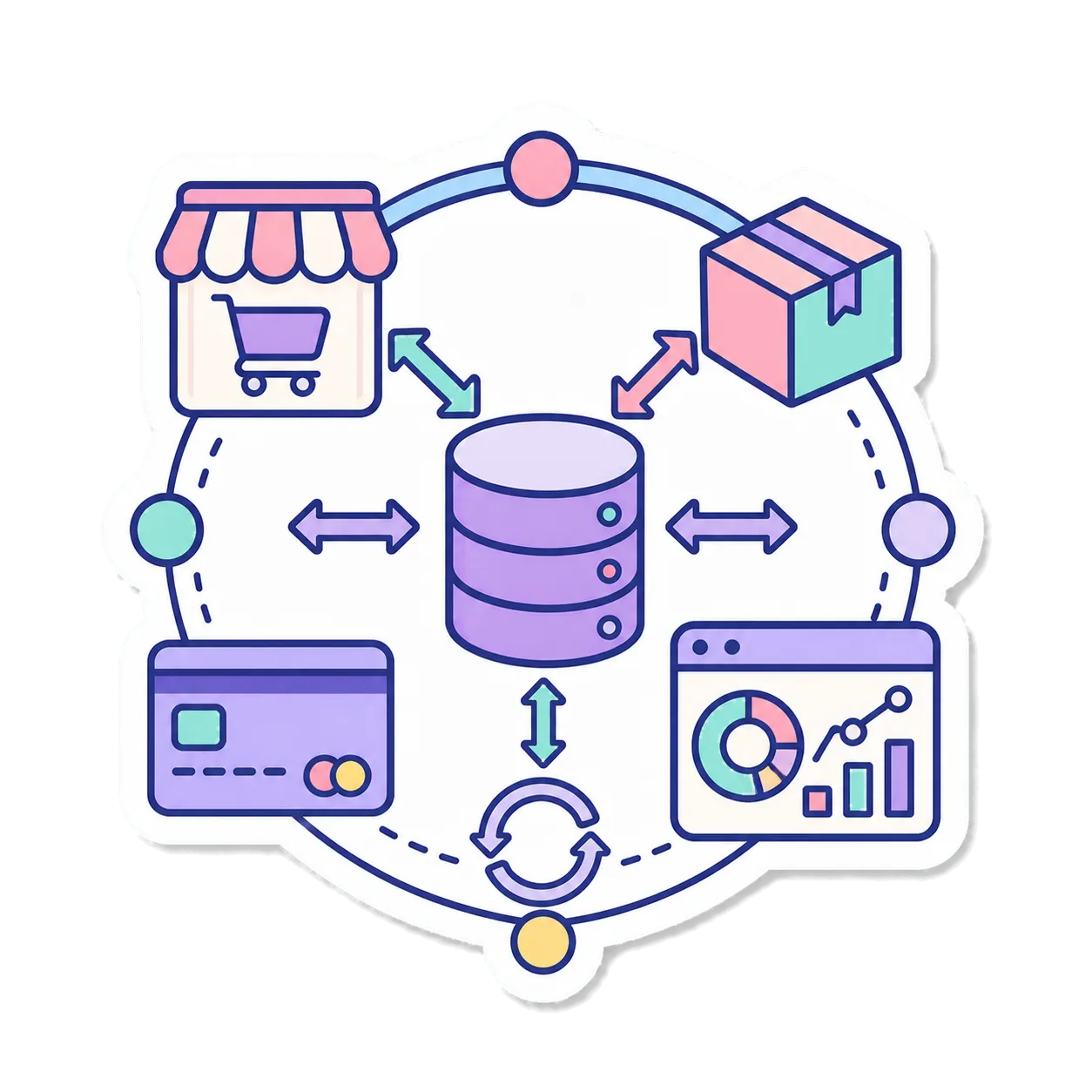
How does data flow between ERP, PIM, CRM, payment, shipping, and analytics? Who is responsible for error handling and data quality?
Who is authorized to access what? How do updates, backups, and recovery work if a key component fails?
What is the actual experience for customers, editorial staff, back-office personnel, and support staff—on mobile devices, in terms of accessibility, and during service disruptions?
We'll start by making the decision that needs to be made. After that, I'll specifically examine the parts of the system that are relevant to it.
What should be decided following the review—and which areas are explicitly excluded?
I document the architecture, contracts, proposals, known issues, analytics, logs, and the expertise of the relevant people.
I review discussions, configurations, data flows, and operations. If any key details remain unresolved, I'll move on to the code with your approval.
We consider the impacts, interdependencies, reversibility, and also the costs of inaction.
Unresolved issues and conflicting objectives are not glossed over in the report but are addressed with the parties involved.
You can see what should be done now, later, or not at all—and where additional documentation is still needed before a decision can be made.
Instead of a long list of issues, you’ll receive clear priorities, transparent explanations, and a next step.
Decision-making context, key risks, and recommendations explained in plain language.
Architecture, dependencies, and open assumptions explained in a way that is understandable to both management and the technical team.
What can be stabilized quickly and what should be fundamentally changed.
Sequence, conflicting objectives, decision points, and any additional documentation required.
I’m not addressing general website or CMS questions here. The key factor is which e-commerce platform and technical architecture best suit your product lineup, processes, integrations, team, and operations. My in-depth knowledge of WooCommerce helps me assess the implications all the way down to the code and database—but it’s not a deciding factor on its own. If Shopify, Shopware, Medusa.js, or a custom-built solution makes more sense, I’ll identify it and explain why.
These examples show that I don't just evaluate concepts. I develop, integrate, and operate the systems I advise on.
API, data, and booking logic.
WooCommerce Under Real-World Load.
Product and Data Architecture.
You’ll receive an independent technical assessment and a basis for your next decision—whether it’s regarding a modernization, a platform migration, a new integration, or the production deployment of AI. The review is not an automatic pitch for a relaunch and does not replace penetration testing or legal or tax advice.
All Types of CounselingIt is most useful when a production system is affected and a specific decision needs to be made.
What I need for the exam and what might happen next.
No. The review is tailored to your e-commerce and platform architecture. I can perform a particularly in-depth review of WooCommerce, but it is not a requirement.
Not always. It depends on the question we're trying to answer. Sometimes the architecture, configuration, logs, and discussions are enough. If an important assumption remains unresolved, I have to test it directly in the code.
Yes. Then I'll set aside time to reconstruct the system based on discussions, configuration, and existing documentation. The lack of documentation is part of the initial situation.
Yes. I review assumptions, gaps, dependencies, and the consequences of the proposed options—not the agency as a company.
Yes. Your team is familiar with procedures, exceptions, and past decisions that aren't documented anywhere. This knowledge should be included in the review and the closing meeting.
Based on the results, you decide whether to stabilize the system, modernize it gradually, switch platforms, investigate an open question further, or deliberately make no changes.
Yes, as agreed separately. I can take on a technical leadership role, manage a team, or develop critical components myself.



 Business
 Architecture
 Commerce
 Integrations
 Security
 Users & Operations





 The requirements set the direction.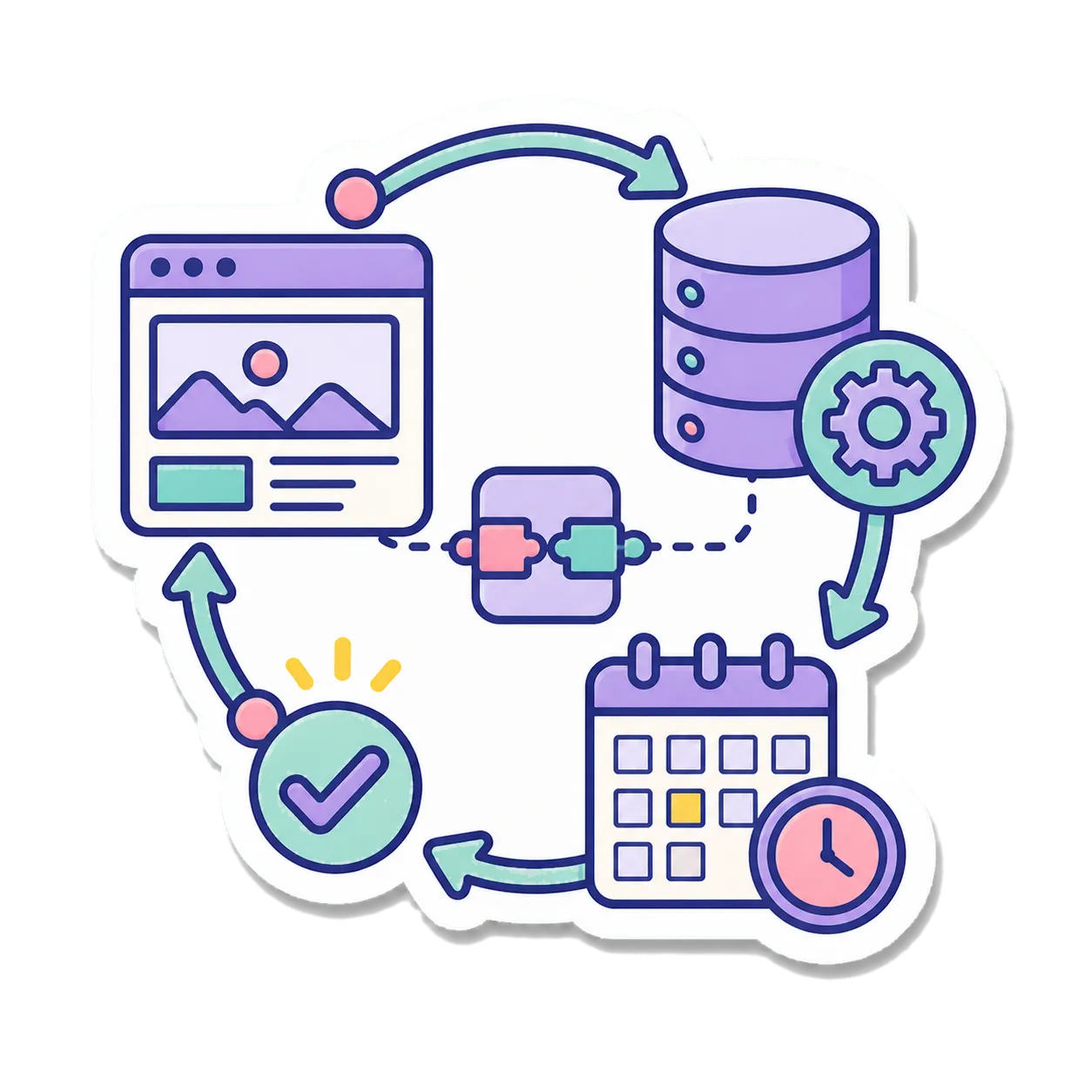


 Existing System