 Saskia Teichmann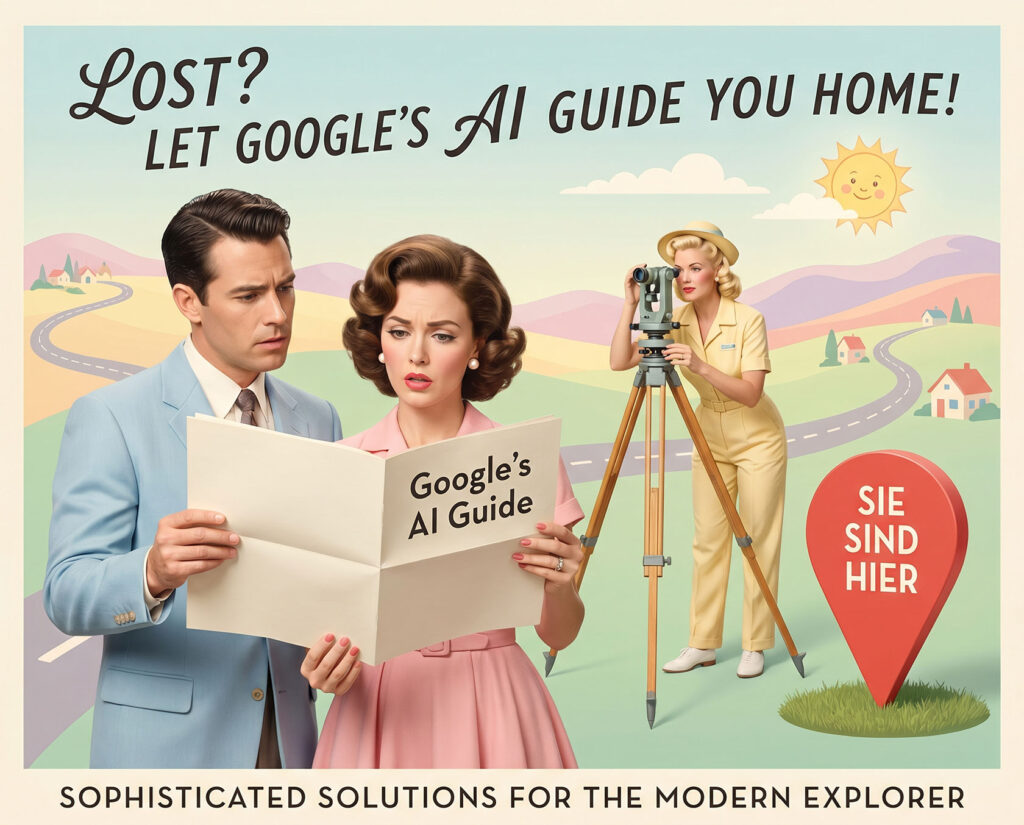
Summary: Google's Guide explains Google. However, ChatGPT, Claude, and Perplexity still require their own evaluation.
In May 2026, Google published an official guide on how to optimize websites for Google Search’s generative AI features: „Optimizing your website for generative AI features on Google Search.“ The reaction in many SEO feeds was immediate: „AI optimization is just SEO. Case closed.“
This interpretation is too broad. It turns a Google guideline into a rule for all AI systems. Google’s guide applies to Google. In the provider documentation from OpenAI, Anthropic, and Perplexity that I reviewed on July 11, 2026, I found no comparable guidance on which content to cite or which brands to recommend—but I did find crawler documentation and external metrics. This shifts the focus of the question: It’s not just about implementation, but about measurement.
What Google's Guide Says — and Who It Applies To
The guide is remarkably clear. Google updated it on July 10, 2026. Three key points remained unchanged; in the original:
First: No special AI files are required.
„You don't need to create new machine-readable files, AI text files, markup, or Markdown to appear in Google Search. Doing so will neither harm nor help your site's visibility or rankings in Google Search.“
This includes llms.txt. The file has neither a positive nor a negative impact on Google search results.
Second: no specific schema pushing.
„Structured data isn't required for generative AI search, and there's no special schema.org markup you need to add.“
Structured data is still recommended as part of general SEO efforts—but there is no secret AI markup that forces citations.
Third: AI optimization is SEO.
„Optimizing for generative AI search means optimizing for the search experience, and therefore it's still SEO.“
Anyone with solid SEO fundamentals—crawlable content, visible text, a clear structure, and up-to-date data—has, from Google's perspective, done what is required for AI Overviews and AI Mode.
New as of July 10: Google is expanding its metrics. The guide now refers to a „Generative AI performance report“ in Search Console. The report is intended to show how content is found via Google’s generative features in Search and Discover. This is a significant change from the July 3 version—and it also confirms the platform’s limitations: Google measures Google. This report provides no information regarding ChatGPT, Claude, or Perplexity.
This is a useful guide with a clearly defined scope: on Google Search. The guide describes how Google populates its own AI features. It says nothing about how ChatGPT, Claude, or Perplexity decide which sources to cite and which brands to recommend.
What Remains Unclear Outside of Google
OpenAI, Anthropic, and Perplexity document their crawlers—which bots are out there and how website operators can control access. I did not find any official guidelines on how content is cited in responses or how brands are recommended in the provider documentation I reviewed on July 11, 2026.
But that doesn't mean we know nothing about these platforms. It just means that the information comes from a different source: from measurements by SEO and AI visibility providers who analyze AI responses and citations in larger datasets. Their findings apply only to the specific platforms, time periods, and methods examined.
What the empirical data shows
Four findings, each with a sample size, platform, and time period—because a number without this context is misquoted:
- Ahrefs (May 2026): 1,885 pages that newly added the JSON-LD schema, compared to 4,000 control pages; citations were measured in Google AI Overviews, Google AI Mode, and ChatGPT, 30 days before and after the change. Result: no reliable causal effect. AI Mode (+2.4 %) and ChatGPT (+2.2 %) fall within the margin of error, while AI Overviews even shows a decrease of −4.6 %. The often-cited correlation („cited pages are more likely to have Schema“) can be explained by better-maintained sites—not by the markup itself.
- SE Ranking (November 2025): Analysis of approximately 300,000 domains. The presence of an llms.txt file did not make a domain more likely to be cited by AI models. The study’s machine-learning model actually became more accurate without this feature.
- ALLMO (January 2026): Of the 94,614 URLs cited in 11,867 AI responses, exactly one URL was an llms.txt page — 0.001 %.
- ConvertMate (January 2026): Based on a proprietary analysis of more than 80 million citations across more than 10,000 domains, the provider reports a correlation of r = 0.664 between brand web mentions and AI citations. The published methodology does not provide sufficient detail on sampling and modeling to infer a causal relationship. I therefore treat this value as an indicative finding from a tool provider, not as proof that additional mentions lead to citations.
Two things stand out. First: The individual technical signals that have long been the focus of the GEO discourse—llms.txt and Schema markup—do not provide a reliable citation lever in these measurements. Google explicitly states this for its own search; SE Ranking, ALLMO, and Ahrefs also see no positive effect in their respective datasets. Second: It does not follow from this that a single editorial or reputation-related factor influences citations caused. Google recommends unique, non-interchangeable content for Google. ConvertMate reports a strong correlation with brand mentions. Both are approaches, not guarantees of results.
It is important to note the limitations of the data: The studies evaluate different platforms using different methods. Taken together, they paint a consistent picture, but no single finding automatically applies to all AI systems.
Guidelines and audits address two different questions
The practical difference is simpler:
One Platform Guide basically says what everyone should do: make content crawlable, keep data up to date, and avoid producing interchangeable filler content. That's valuable, but it only answers the question: What does this platform generally recommend?
An Audit Examine the specific case: Is this website mentioned by ChatGPT, Claude, Perplexity, and Google AI? Is it understood correctly? Which sources shape the picture? Which competitors appear instead?
In short: The guidelines describe the target state. The audit reveals the actual state.
Both have their place. Google’s Guide is the authoritative reference for Google—anyone who contradicts it needs very solid data. But anyone who concludes from „AI Optimization is SEO“ that measurement is unnecessary is confusing the user manual with the status report. Two websites can fully comply with the same guide and yet appear completely differently in AI responses—because reputation, source reliability, and entity clarity cannot be determined by a checklist alone.
What This Means for Your WordPress Site
For a WordPress site, this means:
- Use Google's Guide to Google. SEO fundamentals remain the foundation for AI Overviews and AI Mode. If crawlability, visible text, structure, or timeliness are lacking, that’s the first area to address.
- Treat llms.txt as a supplement, not as the main tool. I explain why the file can still be useful in certain scenarios—such as for agents and documentation—in llms.txt for WordPress: Useful, Overrated, or Both? taken apart.
- Use a schema to ensure clarity regarding entities. Structured data helps machines categorize people, brands, products, and content more accurately. Based on current data, it cannot be relied upon as a direct driver of AI citations. The assessment of this is provided in Schema, Entities, and Citable Content.
- Focus on the substance rather than on a supposed "one-click solution": Your own experience, your own data, clear statements, and reliable external context. Google explicitly recommends this kind of unique content for Google; you'll have to determine whether and how other systems reference it.
- Measure before you optimize. For Google, this has included the Generative AI Report in Search Console since the July 10 update. To get a cross-platform view, you’ll still need to conduct your own analysis across multiple systems, competitors, and sources. You can find out how I systematically assess the current state of affairs in My Approach to AI Visibility Audits with citelayer®.
If you want to see the current state of your website, the AI Visibility Audit with citelayer® In addition: multiple platforms, competitors, source analysis, prioritized next steps.
The short version: Google explains Google. You have to measure your own AI visibility.
Sources and Verification
Verified again on July 11, 2026:
- Google: „Optimizing Your Website for Generative AI Features on Google Search“ — https://developers.google.com/search/docs/fundamentals/ai-optimization-guide. The live page shows „Last updated 2026-07-10 UTC.“ A text comparison of the Wayback version from July 3, 2026, with the live version from July 10 reveals the following relevant changes: a new section on the „Generative AI performance report“ in Search Console, an expanded eligibility note, and the inclusion of the metric in the summary. These changes are listed above. The sections on non-replaceable content, myth-busting, and agentic experiences were already present previously. The three verbatim quotes were re-checked against the live page. Basis for comparison: Wayback snapshot
20260703052824; Google's launch announcement dated May 15, 2026: https://developers.google.com/search/blog/2026/05/a-new-resource-for-optimizing. - SE Ranking: llms.txt Study (~300,000 domains, published Nov. 7, 2025) — https://seranking.com/blog/llms-txt/. Key result confirmed live.
- ALLMO: llms.txt Report (94,614 cited URLs from 11,867 AI responses, 1 llms.txt URL = 0.001 %, published Jan. 23, 2026, data collected Aug.–Dec. 2025) — https://www.allmo.ai/articles/llms-txt. Figures confirmed in real time.
- Ahrefs: „We tracked 1,885 pages that added Schema. AI citations barely changed." (May 11, 2026, 1,885 test pages, three matched control pages each, Google AI Overviews, AI Mode, and ChatGPT, 30 days before and after JSON-LD detection). The primary source confirms −4.6 % for AI Overviews, as well as +2.4 % in AI Mode and +2.2 % in ChatGPT, which are statistically indistinguishable from zero. Ahrefs explicitly cites remaining confounders, aggregated schema types, and the short post-window as limitations.
- ConvertMate: „AI Visibility Study 2026", published January 15, 2026. The source page cites 80M+ citations, 10,000+ domains, four platforms, and r = 0.664 for brand web mentions. The methodology remains proprietary and is not described in a way that allows for replication; this is explicitly noted in the article.
- The previous AISO figure „44.2 % of citations from the first 30 %“ has been removed: no reliable primary AISO analysis could be found, and attributions in third-party sources were inconsistent.
Internal Links (AI Visibility 2026 Series, all published on June 18–19, 2026):




Discussion on the post
0 comments